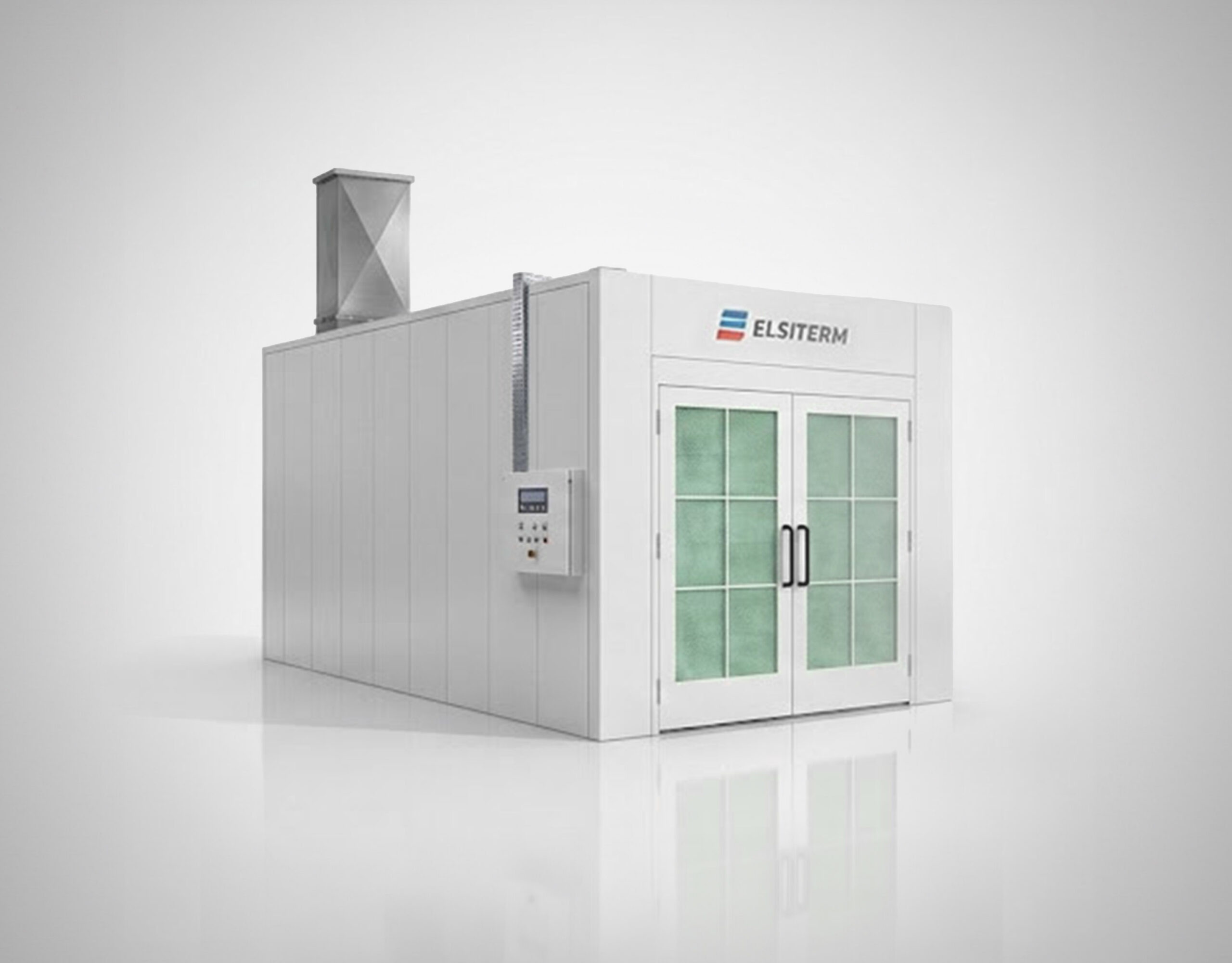
Spray Booths
Understanding Spray Booth Technologies
Elsiterm offers two fundamental spray booth technologies, each designed for specific production requirements and operating preferences.
Dry Filter Spray Booths
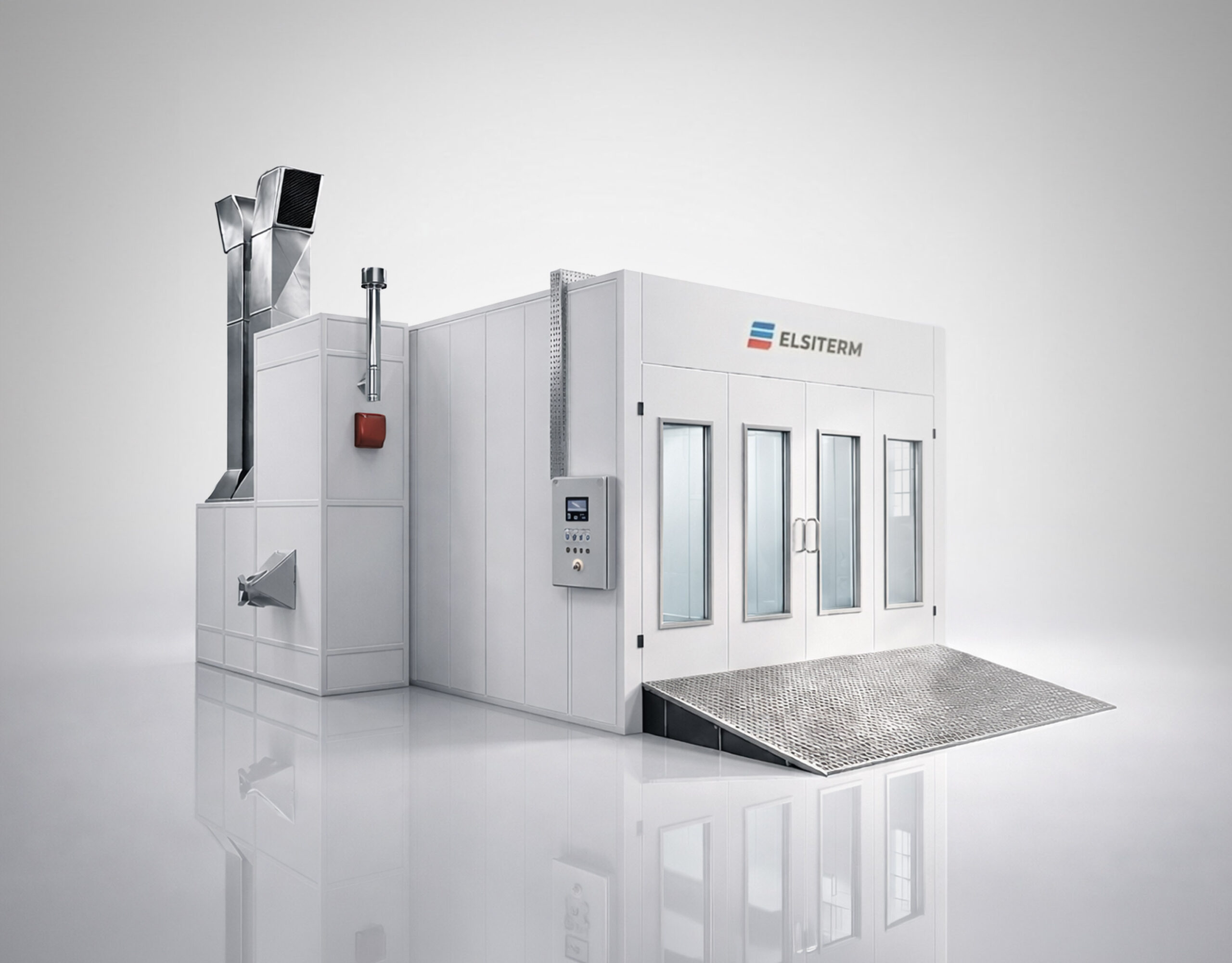
Dry filter booths capture overspray using disposable or cleanable filter media. Air flows through the spray zone and passes through paper, fiber, or multi-stage filters that trap paint particles before exhausting clean air. This technology offers simplicity, lower initial cost, and straightforward maintenance through periodic filter replacement.
Best for: Moderate paint volumes, varied coating types, facilities without water treatment infrastructure, cold climate operations, and applications requiring simple maintenance procedures.
Water Wash Spray Booths
Water wash booths use a continuous water curtain system to capture overspray. Paint particles are absorbed into flowing water, which is then treated, filtered, and recirculated. This eliminates disposable filter costs and provides superior capture efficiency for high-volume operations.
Best for: High production volumes (50+ liters per day), automotive manufacturing, continuous operation facilities, multiple booth installations, and operations where filter disposal costs justify water treatment investment.
[IMAGE PLACEHOLDER: Dry filter vs water wash side-by-side comparison diagram]
Airflow Configurations Explained
For dry filter spray booths, airflow design significantly impacts finish quality, installation requirements, and operating costs. Each configuration offers distinct advantages for specific applications.
Crossdraft Airflow
Air flows horizontally from intake wall to exhaust wall across the spray zone. This straightforward design offers reliable performance with minimal installation complexity and no floor pit requirements.
Advantages: Lower cost, simple installation, no pit needed, proven reliability, easy maintenance.
Ideal for: Budget-conscious projects, large parts, space-limited facilities, general industrial coating.
Downdraft Airflow
Clean air enters from the ceiling and flows vertically downward through floor grating to exhaust below. This premium design provides superior finish quality by pulling overspray away from the part and operator breathing zone.
Advantages: Best finish quality, cleanest operator environment, optimal particle removal, professional results.
Ideal for: High-quality finishes, automotive refinishing, aerospace components, show vehicles, precision work.
Side Downdraft Airflow
Air enters from ceiling and flows downward, then horizontally toward low-level side wall exhausts. This hybrid approach delivers near-downdraft performance without requiring a floor pit.
Advantages: No pit excavation, better than crossdraft finish quality, retrofit-friendly, cost-effective upgrade.
Ideal for: Existing facilities, retrofit installations, moderate finish requirements, budget-conscious downdraft alternative.
[IMAGE PLACEHOLDER: Three airflow types comparison diagram – crossdraft, downdraft, side downdraft]
How to Choose the Right Spray Booth
Selecting the appropriate spray booth depends on your specific application requirements, production volume, quality standards, and facility constraints.
Key Decision Factors
1. Paint Volume and Frequency
- Low to moderate volumes: Dry filter booths with crossdraft or side downdraft
- High daily volumes (50+ liters): Consider water wash technology
- Intermittent use: Simple dry filter crossdraft
- Continuous production: Water wash or automated dry filter systems
2. Finish Quality Requirements
- General industrial coating: Crossdraft dry filter
- Professional quality finishes: Side downdraft dry filter
- Premium show-quality results: Downdraft dry filter
- High-volume production quality: Water wash with proper airflow
3. Installation Constraints
- Existing facility, no pit possible: Crossdraft or side downdraft
- New construction with pit capability: Downdraft for best results
- Limited floor space: Vertical designs may be advantageous
- Retrofit applications: Side downdraft offers best quality without pit
4. Operating Budget
- Lower initial cost priority: Crossdraft dry filter
- Long-term operating cost focus: Water wash for high volumes
- Balanced approach: Side downdraft dry filter
- Premium investment: Downdraft dry filter with full automation
5. Maintenance Capabilities
- Simple maintenance preference: Dry filter with basic controls
- Dedicated maintenance team: Water wash or automated systems
- Limited technical staff: Straightforward dry filter designs
Industries and Applications
Elsiterm spray booths serve manufacturers across diverse industries, each with unique coating requirements and production demands.
Automotive and Transportation
Vehicle refinishing, component painting, truck and bus manufacturing, automotive parts coating, and collision repair facilities rely on spray booths for consistent quality and regulatory compliance.
Metal Fabrication and Manufacturing
Structural steel, fabricated assemblies, machinery components, industrial equipment, and metal products benefit from controlled spray environments that protect quality and workers.
Aerospace and Defense
Aircraft components, defense equipment, and precision aerospace parts require the clean environment and controlled conditions that professional spray booths provide.
Heavy Equipment and Machinery
Construction equipment, agricultural machinery, industrial vehicles, and material handling equipment coating operations demand robust booth solutions for large parts and high durability finishes.
Furniture and Woodworking
Wood finishing, cabinetry, architectural millwork, and furniture manufacturing operations use spray booths to achieve smooth, professional finishes while protecting workers from finishing product exposure.
General Manufacturing
Appliances, consumer products, electronics enclosures, sporting goods, and countless other manufactured items benefit from professional spray booth environments that ensure consistent coating quality.
Ready to Discuss Your Project?
Get a tailored offer, pricing details, and expert guidance from our technical team to find the right machinery for your application.

TR
EN
FR